
1. Morning Routines and Smart Environments
The touchpoints of everyday AI begin before conscious decision-making starts each morning. Modern living spaces rely on ambient intelligence systems that integrate environmental controls, schedule management, and energy optimization into unified, self-adjusting networks.

- Predictive Climate Control: Smart thermostats analyze historical occupancy patterns, external weather forecasts, and spot electricity rates to dynamically adjust indoor ambient temperatures. Heating or cooling cycles activate prior to wake-up times, minimizing power consumption during peak tariff hours while optimizing thermal comfort.
- Intelligent Schedule Management: Voice-activated assistants and connected calendar applications synthesize data from traffic feeds, weather alerts, and user commitments to suggest optimal alarm settings and departure times.
- Automated Home Logistics: Smart appliances monitor inventory levels—such as water filters or essential groceries—and trigger restock alerts or automated orders via connected commerce platforms.
2. Workplace Productivity and Administrative Automation
In professional environments, artificial intelligence functions as a cognitive force multiplier, reducing the hours required for manual context switching, document processing, and operational coordination.
Raw Data Input (Emails, Transcripts, Sensor Feeds)
                     │
                     ▼
       ┌──────────────────────────┐
       │   AI Processing Core     │
       │  (NLP & Machine Learning)│
       └─────────────┬────────────┘
                     │
         ┌───────────┴───────────┐
         ▼                       ▼
Structured Insights      Automated Action
(Summaries, Action Items)  (Scheduling, Workflows)
Communication and Documentation
Large Language Models (LLMs) and specialized natural language processing (NLP) pipelines automatically process unstructured workplace communications. Video conferencing software captures real-time audio feeds, generating structured meeting summaries, speaker attributions, and task assignments. Email clients filter priority messages from operational noise, auto-generate contextual draft responses, and extract action items directly into project tracking software.
Content Creation and Code Assistance
For knowledge workers, AI writing tools offer stylistic refinement, tone adjustments, and rapid drafting for reports, technical specifications, and marketing campaigns. Software developers use code-completion algorithms to generate boilerplate syntax, detect security vulnerabilities in real time, and translate legacy codebases across programming languages, accelerating development cycles significantly.
3. Transportation, Navigation, and Autonomous Mobility
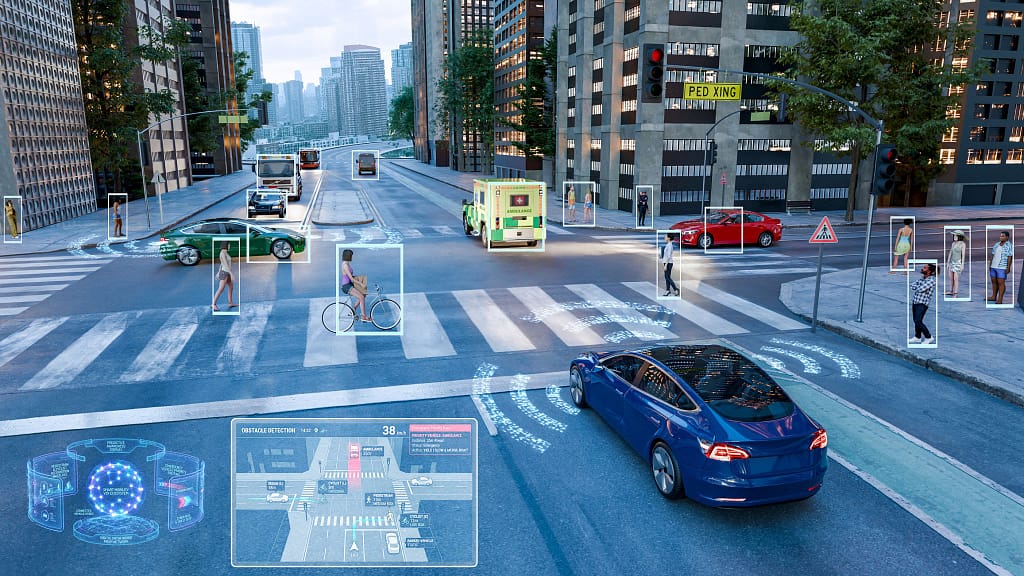
Commuting and logistics rely heavily on predictive algorithms that process thousands of continuous telemetry points per second.
Computer vision in autonomous transport. Source: karelnoppe / Getty Images
| Domain | Core AI Mechanism | Direct Everyday Benefit |
| Route Optimization | Real-time graph neural networks & GPS telemetry | Dynamic rerouting around accidents, road construction, and sudden congestion spikes. |
| Driver Safety (ADAS) | Computer vision & ultrasonic sensor fusion | Automatic emergency braking, lane-keeping assistance, and driver fatigue monitoring. |
| Ride-Hailing & Logistics | Predictive demand-matching algorithms | Reduced wait times for commuters and optimized delivery routes for supply chain fleets. |
4. Healthcare, Personal Wellness, and Diagnostics
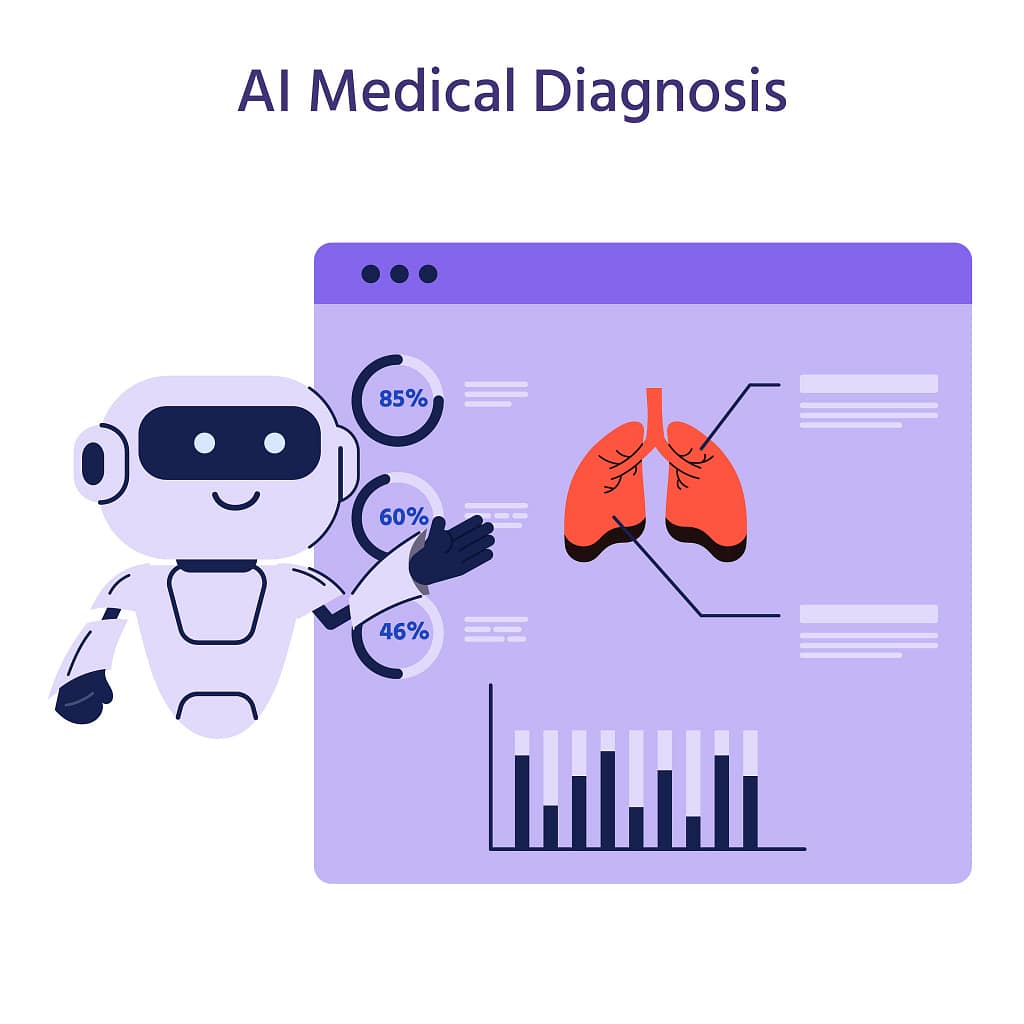
The integration of machine learning into clinical settings and consumer wearables has shifted healthcare from reactive treatment toward continuous, preventive monitoring. AI-assisted medical diagnostics. Source: Chaliya / Getty Images
Consumer Health Tracking
Smartwatches and continuous health monitors leverage optical sensors analyzed by machine learning models to track heart rate variability, sleep architecture, and blood oxygen levels in real time. These devices establish personal baselines and alert users to physiological anomalies—such as atrial fibrillation or early markers of infection—long before overt clinical symptoms appear.
Medical Diagnostics and Drug Discovery
In clinical radiology, deep learning models analyze X-rays, MRIs, and CT scans, surfacing microscopic tissue irregularities or tumors with high precision to assist physicians. In pharmaceutical research, generative AI models simulate molecular folding structures, compressing the timeline required to identify candidate molecules for novel treatments from years down to weeks.
5. Personalized Education and Skill Acquisition
Traditional one-size-fits-all educational paradigms are being reshaped by adaptive learning systems that tailor curriculum progression to individual cognitive speeds and retention profiles.
- Dynamic Curriculum Progression: AI-powered learning platforms analyze user test performance, time-on-task, and error patterns to automatically adjust problem difficulty and present remedial concepts in real time.
- Instant Conversational Tutoring: Interactive AI systems act as subject-matter tutors available around the clock, capable of explaining complex scientific or mathematical problems through multiple conceptual angles until the student grasps the material.
- Language Acquisition: Natural language processing applications evaluate pronunciation, grammar, and vocabulary usage during real-time conversational exercises, providing targeted feedback without judgment.
6. Financial Services and Consumer Security
Behind modern banking interfaces, machine learning models work continuously to secure digital transactions, streamline lending decisions, and optimize personal financial planning.
Transaction Initiated
             │
             ▼
┌──────────────────────────────┐
│  AI Fraud Detection Model    │
│  - Behavioral Fingerprinting │
│  - Geo-Spatial Anomaly Check │
│  - Velocity Rate Check       │
└──────────────┬───────────────┘
               │
       ┌───────┴───────┐
       ▼               ▼
 [Approved]     [Flagged/Blocked]
 (Normal)       (Suspicious pattern)
- Real-Time Fraud Prevention: Anomaly detection algorithms process global banking transactions in milliseconds, cross-referencing spending velocity, location signatures, and purchase types to block unauthorized credit card usage instantly.
- Personal Budgeting & Wealth Management: Financial platforms analyze recurring income, discretionary spending habits, and market conditions to suggest personalized savings allocations, track investment portfolios, and predict upcoming cash flow requirements.
7. Ethical Considerations and the Future Landscape
As artificial intelligence becomes deeply embedded across everyday systems, several societal challenges require active navigation:
- Data Privacy & Consent: Ambient intelligence requires vast data streams to maintain personalization, highlighting the need for transparent data practices, local device processing, and explicit user controls.
- Algorithmic Bias: Machine learning models mirror the datasets upon which they are trained; rigorous evaluation remains essential to prevent systemic bias in hiring, credit scoring, and automated decision-making.
- Cognitive Dependency: As automated systems assume more routine analytical and scheduling tasks, maintaining core critical thinking, research, and problem-solving skills remains crucial for individuals.
The ongoing transformation driven by artificial intelligence is defined not by sudden disruption, but by quiet integration. By systematically removing mechanical friction from communication, mobility, health management, and domestic tasks, AI allows individuals to redirect time and cognitive focus toward creative, strategic, and interpersonal pursuits.
Next Post:- How AI Is Transforming Small Businesses in the USA (2026 Guide)