

The United States national park system protects over 52 million acres of wilderness, spanning glacial fjords, carved sandstone canyons, subarctic tundra, and ancient rainforests.
Here are ten of the most visually stunning national parks in the country, detailing what makes their landscapes distinctive and how to experience them.
Key Comparison
| National Park | Location | Primary Landscape | Signature Feature |
| Yosemite | California | Glacial U-shaped granite valley | El Capitan & Half Dome |
| Zion | Utah | Red Navajoo sandstone canyon | The Narrows & Angels Landing |
| Glacier | Montana | Glaciated Northern Rocky Mountains | Going-to-the-Sun Road |
| Grand Teton | Wyoming | Fault-block alpine mountain range | Jackson Lake & Cathedral Group |
| Yellowstone | WY / MT / ID | Active volcanic caldera | Grand Prismatic Spring & Old Faithful |
| Grand Canyon | Arizona | Mile-deep eroded gorge | Bright Angel Trail & Mather Point |
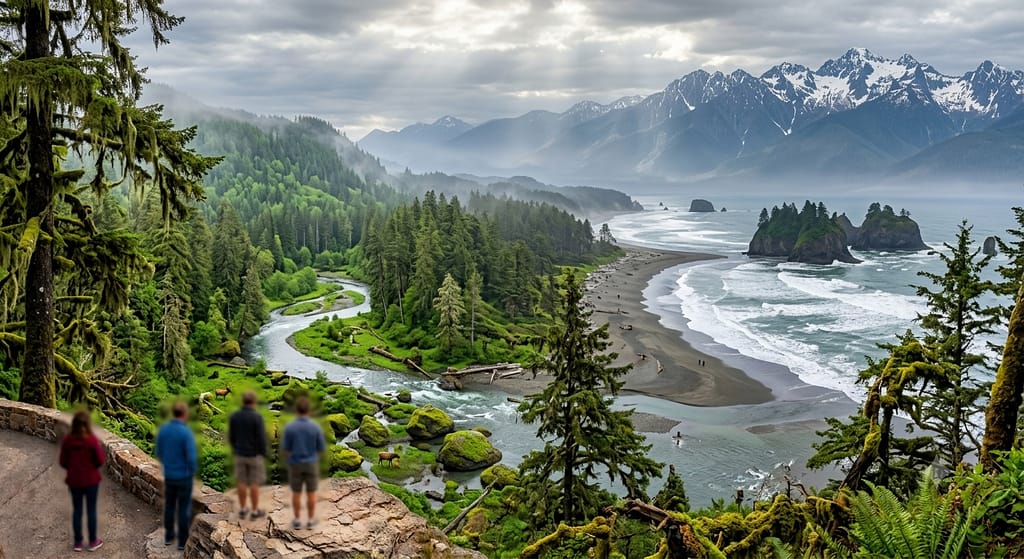
| Olympic | Washington | Rainforest, Pacific coast, alpine peaks | Hoh Rain Forest & Ruby Beach |
| Bryce Canyon | Utah | High-elevation natural amphitheater | World’s largest concentration of hoodoos |
| Acadia | Maine | Granite coastlines & boreal forests | Cadillac Mountain sunrise views |
| Denali | Alaska | Subarctic tundra & alpine massif | Mount Denali (20,310 ft) |
1. Yosemite National Park (California)
Sculpted by glaciers during the last ice age, Yosemite Valley features sheer vertical granite cliffs that rise thousands of feet above the Merced River floor.

2. Zion National Park (Utah)
Located in Southern Utah, Zion Canyon was carved by the Virgin River into steep walls of deep red and cream Navajo Sandstone.
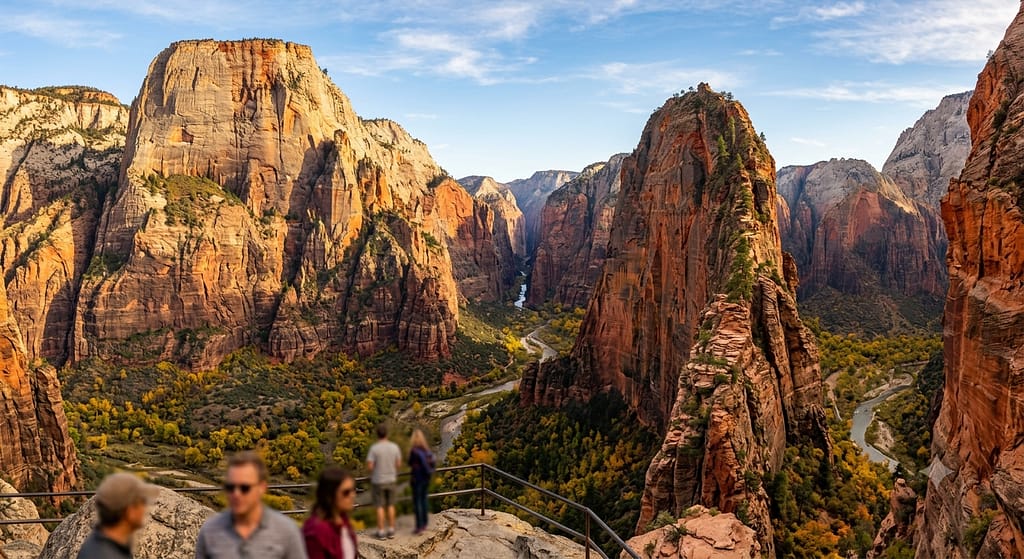
The Narrows, a hike where visitors wade through the Virgin River between canyon walls 1,000 feet high, and Angels Landing, a narrow fin ridge reached via iron chain handrails.
3. Glacier National Park (Montana)
Nicknamed the “Crown of the Continent,” Glacier protects over one million acres of rugged peaks, carved valleys, and turquoise alpine lakes fed by melting ice.
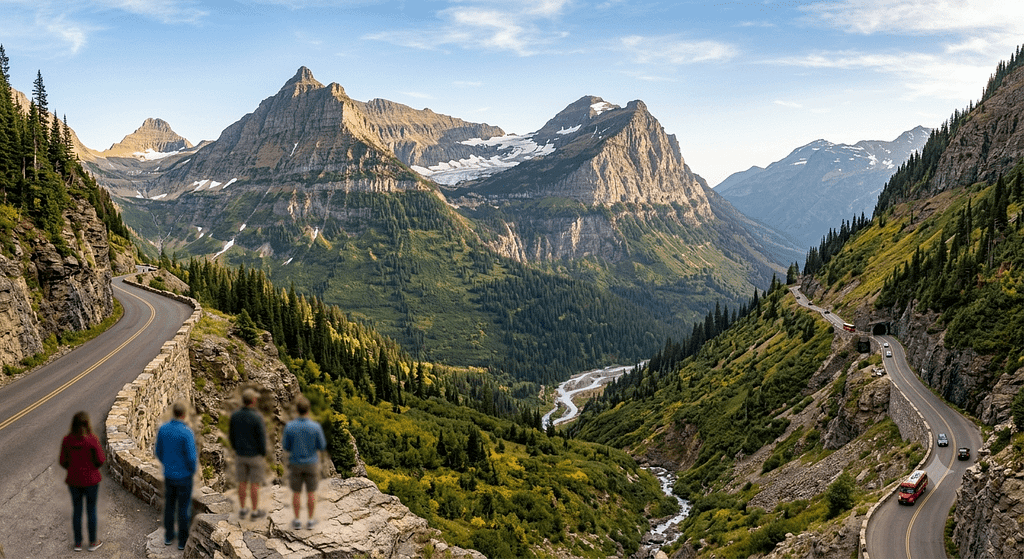
The 50-mile Going-to-the-Sun Road crosses the Continental Divide at Logan Pass. Wildlife includes grizzly bears, mountain goats, and bighorn sheep.
4. Grand Teton National Park (Wyoming)
Unlike most mountain ranges, the Teton Range rises abruptly out of the Jackson Hole valley floor without foothills, creating a sharp vertical skyline.
Reflection photos of the Cathedral Group at Schwabacher Landing or Mormon Row, along with hiking in Cascade Canyon.
5. Yellowstone National Park (Wyoming, Montana, Idaho)
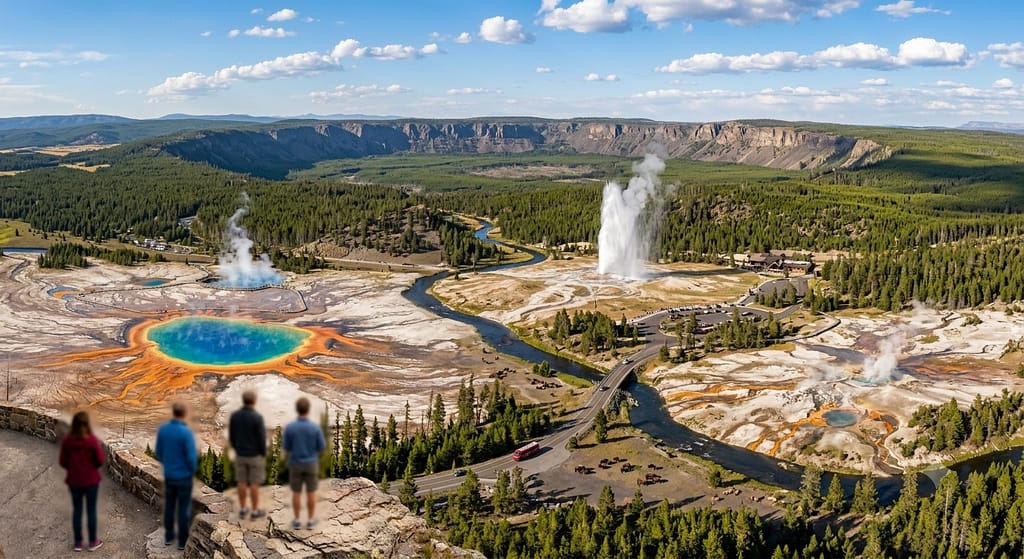
As the world’s first national park (established in 1872), Yellowstone sits directly on top of a volcanic hotspot containing half of the earth’s geothermal features.
Grand Prismatic Spring (a multi-colored thermal pool larger than a football field), Old Faithful geyser, and bison herds grazing in Lamar Valley.
6. Grand Canyon National Park (Arizona)
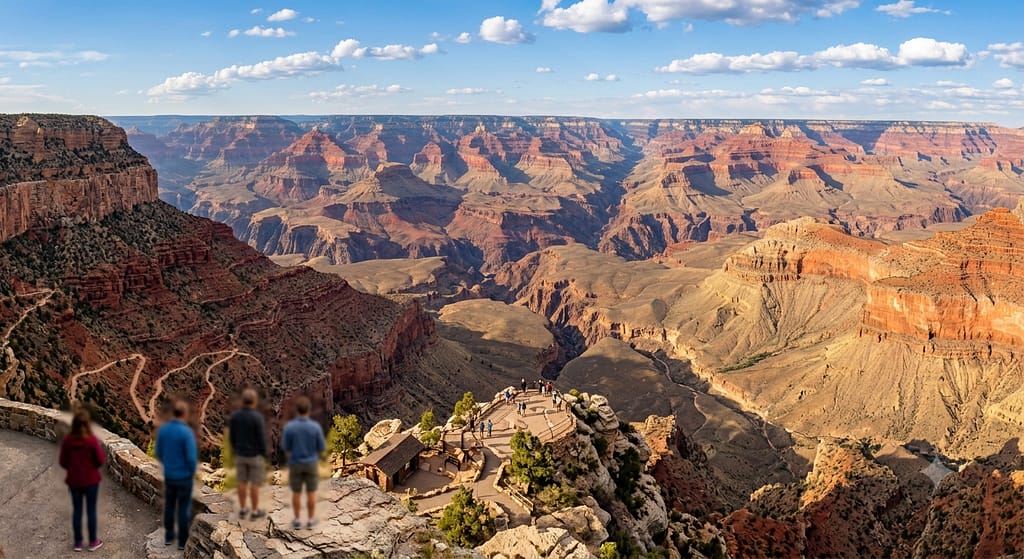
Exposing nearly two billion years of Earth’s geological history, the Grand Canyon stretches 277 miles long, up to 18 miles wide, and over a mile deep.
Watching sunrise or sunset from Lipan Point or hiking down into the canyon along the South Kaibab Trail toward the Colorado River.
7. Olympic National Park (Washington)
Olympic encompasses three distinct ecosystems on Washington’s Olympic Peninsula: glacier-capped mountains, temperate rainforests, and wild Pacific coastline.

Moss-draped bigleaf maples in the Hoh Rain Forest, sea stacks at Ruby Beach, and panoramic views from Hurricane Ridge.
8. Bryce Canyon National Park (Utah)
Despite its name, Bryce is not a canyon but a series of natural amphitheaters filled with thousands of geological structures known as “hoodoos”—thin spires of rock formed by frost wedging
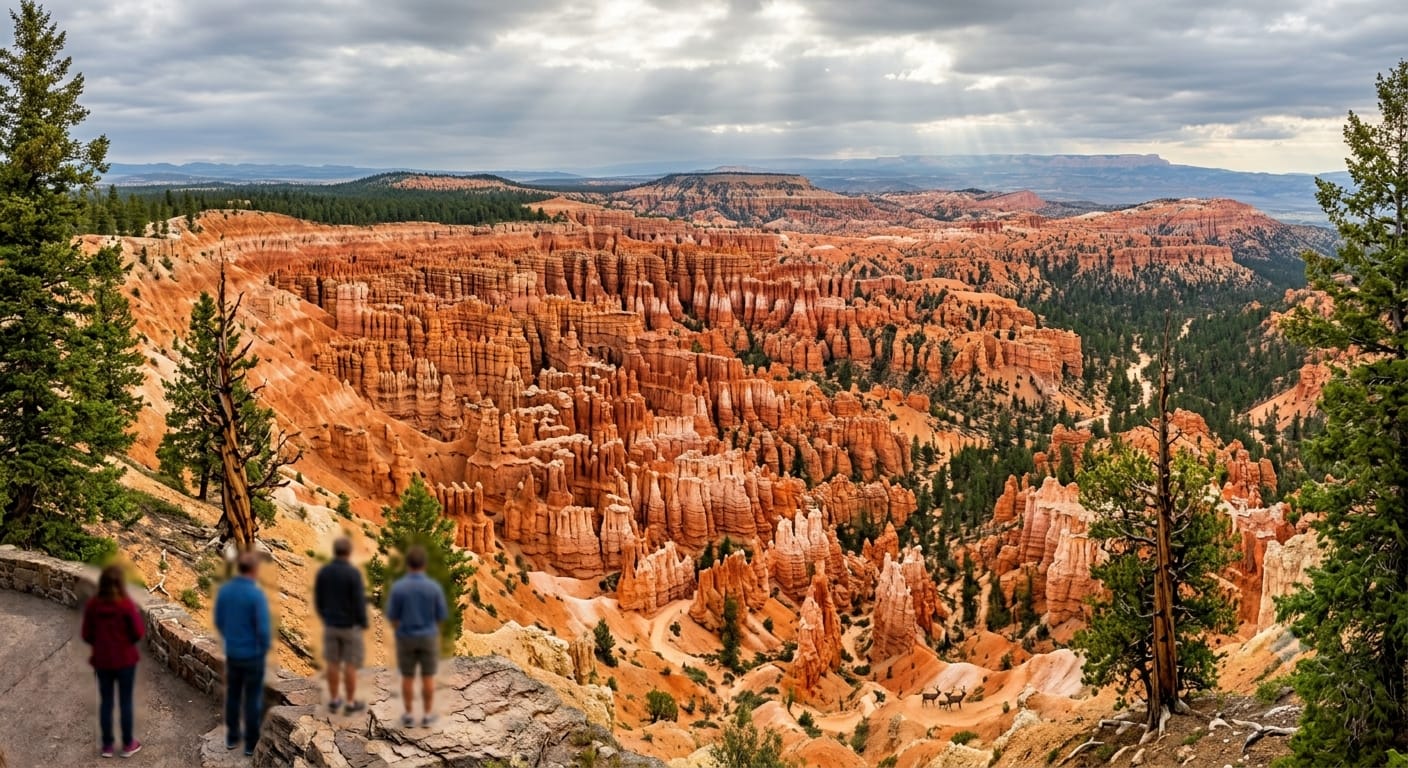
Hiking down the Queen’s Garden / Navajo Loop trail to walk among the towering red rock spires.
9. Acadia National Park (Maine)
Located along Maine’s rocky coastline, Acadia protects granite peaks, ocean inlets, cobblestone beaches, and dense boreal forests.
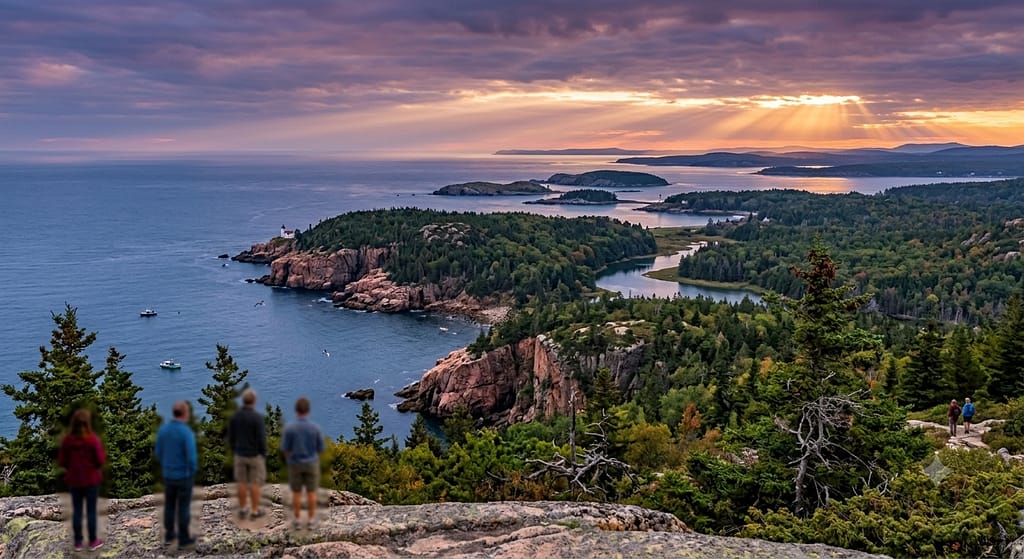
Watching the sunrise from the top of Cadillac Mountain (one of the first places in the US to see the morning sun), driving the Ocean Loop Road, and visiting Jordan Pond.
10. Denali National Park (Alaska)
Spanning six million acres of Alaskan wilderness, Denali centers around Mount Denali—North America’s highest peak at 20,310 feet.
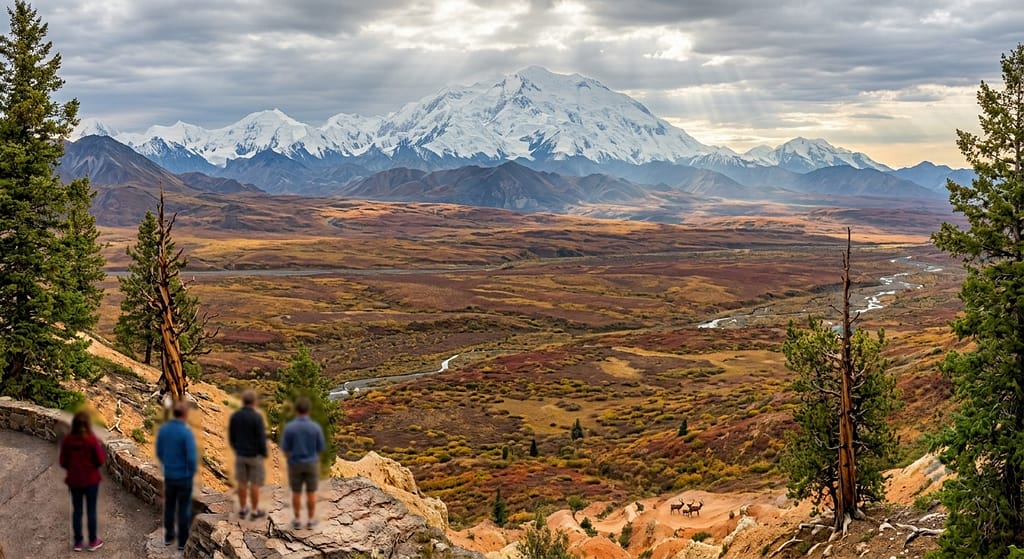
Unspoiled subarctic tundra populated by grizzly bears, wolves, moose, and caribou, with minimal paved infrastructure.
