

In 2026, improving your credit score is especially important because lenders are paying close attention to borrowers’ repayment history, existing debt, and overall credit behavior. Whether you are starting from scratch or trying to recover from past financial mistakes, there are practical steps you can take.
This guide explains how credit scores work and the most effective ways to improve yours.
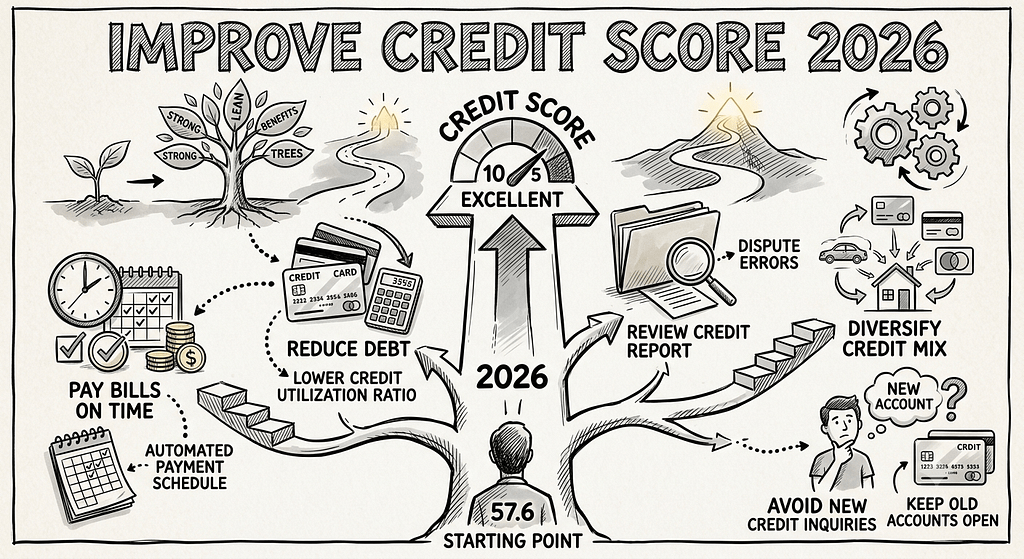
What Is a Credit Score?
A credit score is a numerical representation of your creditworthiness. In simple terms, it helps lenders estimate how likely you are to repay borrowed money on time.
Credit scores are generally calculated using information from your credit report. Different scoring systems may use different ranges and formulas, but the basic idea is similar: responsible credit behavior tends to result in a stronger score.
Your credit report can contain information such as:
- Credit cards and loans
- Payment history
- Outstanding balances
- Credit limits
- Account age
- Recent credit applications
- Defaults or missed payments
- Accounts that have been closed
A higher score can make it easier to qualify for credit, while a lower score may make borrowing more expensive or difficult.
Why Your Credit Score Matters in 2026
Having a good credit score can provide several financial advantages.
First, it may increase your chances of getting approved for loans and credit cards. Second, a strong credit profile can potentially help you qualify for better interest rates.
For example, imagine two people applying for similar loans. One has a strong credit history, while the other has multiple missed payments and high outstanding debt. The first borrower may be considered less risky by the lender and could receive better terms.
A good credit score can also make financial emergencies easier to manage because you may have more borrowing options available when necessary.
However, your credit score should not be treated as the only measure of financial health. Your income, savings, debt, spending habits, and ability to repay are equally important.
1. Check Your Credit Report
The first step toward improving your credit score is understanding what is currently affecting it.
Obtain your credit report and carefully review the information. Look for accounts you do not recognize, incorrect balances, outdated information, duplicate accounts, or payments incorrectly reported as late.
Errors can sometimes negatively affect your credit profile. If you find inaccurate information, follow the appropriate dispute process with the credit bureau and, where necessary, the lender that supplied the information.
Do not assume that your credit report is automatically perfect. Reviewing it regularly can help you identify problems early.
What Should You Look For?
Pay particular attention to:
- Missed or late payments
- Incorrect personal information
- Accounts you never opened
- Incorrect loan balances
- Duplicate accounts
- Incorrect account status
- Incorrect dates
- Accounts that should have been closed
Fixing legitimate reporting errors can potentially improve your credit profile once the information is corrected.
2. Always Pay Your Bills on Time
Payment history is one of the most important parts of responsible credit management.
A missed payment can hurt your credit profile, particularly if it becomes seriously overdue and is reported to the relevant credit bureau.
The easiest way to protect yourself is to create a reliable payment system.
Consider setting up:
- Automatic payments
- Calendar reminders
- Banking alerts
- A monthly bill-payment checklist
If you cannot afford to pay your entire credit card balance, make sure you understand the minimum payment required and pay it by the due date. However, paying only the minimum for long periods can result in significant interest costs.
The goal should be to make every payment on time while gradually reducing your debt.
3. Keep Your Credit Card Balances Low
Another important factor is how much of your available credit you are using.
This is often discussed as credit utilization.
For example, if your credit card has a $5,000 limit and you owe $4,000, you are using 80% of your available credit.
A high balance relative to your credit limit can make your credit profile appear riskier.
A practical strategy is to keep your balances as low as possible rather than regularly using most of your available limit.
If you currently have high balances, don’t panic. You can work on reducing them gradually.
Start by choosing one card and paying more than the minimum whenever possible. Once that balance falls, direct additional money toward another account.
4. Pay Down High-Interest Debt
Credit card debt can become expensive because interest can accumulate quickly.
If you have several balances, consider creating a debt repayment strategy.
Two popular approaches are the debt avalanche and debt snowball methods.
Debt Avalanche
With the debt avalanche method, you focus on paying the debt with the highest interest rate first while maintaining required payments on your other debts.
This can reduce the amount of interest you pay over time.
Debt Snowball
With the debt snowball method, you focus on paying off your smallest balance first.
This can provide psychological motivation because you can see accounts disappear more quickly.
Neither method is universally perfect. Choose the approach that you can realistically follow.
5. Avoid Applying for Too Much Credit at Once
Opening a new credit account can sometimes result in a hard inquiry on your credit report.
One inquiry may not be a major problem, but submitting many applications within a short period can make you appear more dependent on credit.
Before applying for a new credit card or loan, ask yourself:
Do I really need this account?
If you are applying simply because a company is offering a discount or attractive introductory promotion, consider whether opening another account is actually useful for your financial situation.
Being selective about new credit applications can help you maintain a more stable credit profile.
6. Keep Older Credit Accounts Open When Appropriate
The age of your credit accounts can also contribute to your overall credit profile.
If you have an old credit card that you rarely use and it has no significant fees, closing it may not always be the best decision.
An older account can contribute to the length of your credit history, and closing an account may also affect your available credit.
However, this does not mean you should keep every account open forever.
If an account has expensive fees, security concerns, or encourages unnecessary spending, closing it may make sense.
The important thing is to consider the overall financial impact before closing an old account.
7. Don’t Max Out Your Credit Cards
Having access to $10,000 of credit does not mean you should spend $10,000.
Maxing out a credit card can create several problems.
First, it can increase your credit utilization. Second, it can make monthly payments difficult. Third, high balances can result in significant interest charges if you carry them from month to month.
Instead, think of your credit limit as a safety net rather than extra income.
A simple rule to follow is:
Spend based on what you can afford to repay—not based on your credit limit.
8. Build an Emergency Fund
An emergency fund may not directly increase your credit score, but it can help you avoid behaviors that damage your credit.
Imagine your car suddenly needs an expensive repair. Without savings, you might have to put the entire cost on a credit card.
With an emergency fund, you have cash available for unexpected expenses.
Start small if necessary. Even saving a modest amount every month can create a financial buffer over time.
Eventually, aim to build enough savings to cover several months of essential expenses.
9. Become Careful With Buy Now, Pay Later Services
Buy Now, Pay Later services have become increasingly popular because they allow consumers to divide purchases into smaller payments.
While these services can be convenient, they can also encourage people to spend more than they can comfortably afford.
Before using one, ask:
- Can I afford the entire purchase today?
- Do I already have other payment plans?
- Will another monthly payment strain my budget?
- Do I understand the fees and terms?
Having multiple payment obligations can make it harder to manage your finances and may indirectly lead to missed payments.
10. Don’t Close Accounts Just to “Clean Up” Your Credit
People sometimes believe that closing several credit accounts will automatically improve their credit score.
That is not necessarily true.
Closing accounts can reduce your available credit and potentially increase your credit utilization if you still have balances on other cards.
Instead of closing accounts impulsively, evaluate each one individually.
Consider the account’s:
- Annual fees
- Interest rate
- Credit limit
- Age
- Rewards
- Usage
- Impact on your overall finances
Make decisions based on your complete financial situation.
11. Be Careful When Co-Signing for Someone
Co-signing a loan or credit account can be risky.
When you co-sign, you may become responsible for the debt if the primary borrower fails to make payments.
Their financial behavior can therefore affect your own credit profile.
Even if you completely trust the person, unexpected events such as job loss or financial emergencies can make repayment difficult.
Before co-signing, understand exactly what responsibility you are accepting.
12. Deal With Past-Due Accounts
If you already have missed payments or past-due accounts, ignoring them usually will not solve the problem.
Contact the lender or creditor and ask what options are available.
Depending on the situation, you may be able to arrange a repayment plan or another solution.
The most important thing is to stop the problem from becoming worse.
Once you bring accounts current and establish consistent payment habits, you can begin rebuilding your credit history.
Remember that rebuilding credit takes time. There is no legitimate overnight solution.
13. Be Patient
One of the biggest mistakes people make is expecting their credit score to increase dramatically within a few days.
Credit improvement is usually a gradual process.
If you have a history of missed payments, high balances, or other negative information, consistent responsible behavior is more important than quick fixes.
Think of your credit score like a financial reputation.
You build it by repeatedly doing the right things:
Pay on time → Keep balances manageable → Avoid unnecessary debt → Monitor your credit → Repeat.
Over time, these habits can strengthen your overall credit profile.
A Simple 90-Day Credit Improvement Plan
If you want a practical starting point, use the following plan.
Days 1–30: Understand Your Situation
Start by checking your credit reports.
Write down all your debts, balances, interest rates, minimum payments, and due dates.
Then create a realistic monthly budget.
Your goal during the first month is simply to understand where your money is going and prevent additional missed payments.
Days 31–60: Reduce Debt
Choose a repayment strategy and begin paying down your balances.
Stop unnecessary credit card spending and redirect extra money toward your highest-priority debt.
At the same time, continue making every required payment on time.
Days 61–90: Build Better Habits
Continue reducing your balances and monitoring your credit.
Set up automatic payment reminders if you have not already done so.
Avoid unnecessary credit applications and continue building your emergency savings.
At the end of 90 days, review your progress.
Don’t focus only on the score. Look at the behaviors that influence your financial health.
Common Credit Score Mistakes to Avoid
Improving your credit is easier when you know what can damage it.
Avoid these common mistakes:
Paying Bills Late
Even one missed payment can create problems, especially if it becomes seriously overdue.
Carrying Huge Balances
Using a large portion of your available credit can increase your credit utilization.
Applying for Too Many Accounts
Multiple applications in a short period can result in several hard inquiries.
Ignoring Your Credit Report
You cannot effectively manage your credit if you never check what is being reported.
Taking on Debt You Cannot Afford
A credit limit is not the same thing as available income.
Falling for Credit Repair Scams
Be suspicious of anyone promising to instantly erase accurate negative information from your credit history.
Legitimate credit improvement usually comes from correcting genuine errors and developing responsible financial habits.
How Long Does It Take to Improve a Credit Score?
There is no universal timeline.
Someone with high credit utilization may see improvement after paying down balances, while someone with serious negative information may need considerably more time.
Your results depend on factors such as:
- Your existing credit history
- The reason your score is low
- Payment history
- Current debt levels
- Credit utilization
- Number and age of accounts
- New credit applications
- Information reported by lenders
The key is consistency.
A credit score is not rebuilt through one large payment or one new credit card. It is generally strengthened through repeated responsible behavior.

Final Thoughts
Improving your credit score in 2026 does not require complicated financial tricks.
The foundation is surprisingly simple: pay your bills on time, keep debt under control, avoid unnecessary applications, monitor your credit reports, and make borrowing decisions carefully.
If your credit score is currently low, don’t become discouraged. Your past financial mistakes do not have to determine your financial future.
Start with one step today. Check your credit report, organize your payments, and create a realistic plan for reducing debt.
Then keep going.
The most powerful credit-building strategy is not a quick fix—it is developing healthy financial habits that you can maintain for years.
Leave a Reply