

APJ Abdul Kalam Success Story
One that is both inspiring and remarkable. Born on October 15, 1931, in Rameswaram, Tamil Nadu, India, Kalam rose from humble beginnings to become one of the most revered figures in Indian history.
Kalam’s journey to success was marked by hard work, perseverance, and a relentless pursuit of excellence. Despite facing numerous challenges in his early life, including financial difficulties and limited access to formal education, he remained determined to succeed.
His academic journey began at the Schwartz Higher Secondary School in Ramanathapuram, where he excelled in his studies. He later attended Saint Joseph’s College, Tiruchirappalli, and went on to study aerospace engineering at the Madras Institute of Technology. It was during his time at MIT that Kalam developed a keen interest in space technology and rocketry.
After completing his studies, Kalam joined the Defense Research and Development Organization (DRDO) as a scientist. His exceptional talent and dedication soon caught the attention of his superiors, and he was appointed as the project director of India’s first indigenous satellite launch vehicle program, commonly known as SLV-III.
Under Kalam’s leadership, India successfully launched the Rohini satellite into space in 1980, marking a significant milestone in the country’s space program. This achievement catapulted Kalam into the national spotlight and earned him the nickname “Missile Man of India.”
Kalam’s contributions to India’s defense and space research earned him several prestigious awards and honors, including the Padma Bhushan, Padma Vibhushan, and Bharat Rattan, India’s highest civilian award.
In 2002, Kalam was elected as the 11th President of India, serving a term of five years. During his presidency, he focused on promoting education, particularly in rural areas, and advocated for the use of technology to address societal issues.
Even after his tenure as president, Kalam continued to inspire millions of people through his speeches, writings, and interactions with students. He believed in the power of youth and often encouraged them to dream big and work hard to achieve their goals.
Dr. APJ Abdul Kalam’s life is a testament to the fact that with determination, dedication, and a passion for excellence, one can overcome any obstacle and achieve greatness. His legacy continues to inspire generations of Indians and people around the world to strive for success and make a positive impact on society.
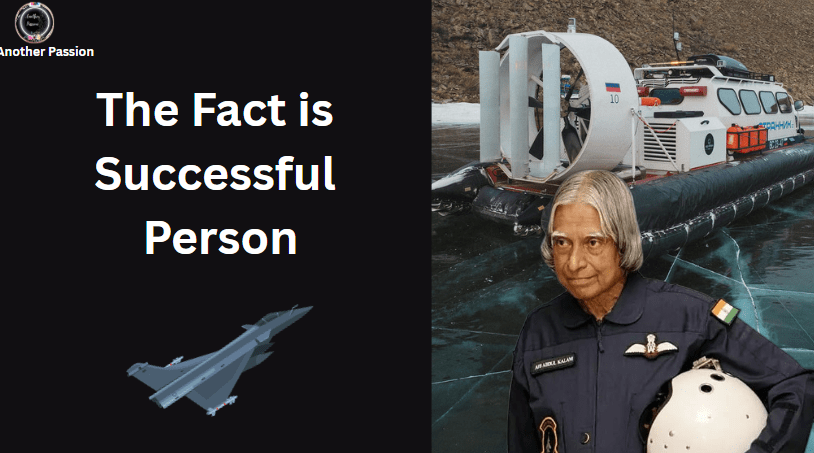
Dr. Kalam is one of the most distinguished scientists, thought leaders, and statesmen of India. He had the unique honor of receiving honorary doctorates from 30 universities and institutions.
Medals and honors came to him like flies flocking to honey. He received the highest civilian award, Bharat Ratna, in 1997, but before that he received Padma Bhushan (1981) and Padma Vibhushan (1990). He was also a recipient of several other awards and fellowships from many professional institutions.
Despite his remarkable achievements and countless accolades, Dr. APJ Abdul Kalam remained a modest and humble individual right till the end.
He was a model of integrity, simplicity, and dedication, leaving an indelible mark on everyone who met him even briefly.
Dr. Kalam’s journey of excellence and service to humanity spanned more than six decades, during which he worked devotedly as a scientist, teacher, and statesman.
The pinnacle of his career came when he was elected as the 11th President of India. His illustrious journey on this earth came to an end on July 27, 2015, while addressing students in Shillong.
Dr. Kalam breathed his last, succumbing to a cardiac arrest, but not before inspiring millions of young men and women to dream big and serve the nation.
Next Post: Sir Isaac Newton



Leave a Reply